
Across ten years of field prototypes, the failure point was rarely the model. It was the enclosure, the connector, and the battery in winter conditions.
Abstract
This document describes the technical architecture and functional capabilities of CAMBOX PRO, an autonomous stereo vision system designed for industrial monitoring. The system integrates dual 4K optical sensors, high-performance edge computing modules, and multi-protocol communication arrays within an IP67-rated enclosure. By performing real-time inference at the edge, the system enables object detection, spatial analysis, and automated alerting in environments with limited infrastructure. This paper outlines the hardware evolution from 2016 to the current 2025 iteration, including the introduction of the CAMBOX PRO Mini configuration.
System Overview and Core Design
CAMBOX PRO (Figure 1) is an autonomous monitoring system built for challenging industrial environments. Unlike traditional surveillance systems that require constant human oversight and external processing power, CAMBOX PRO combines durable hardware with onboard artificial intelligence to operate as a self-contained unit. The unified hardware design features dual 4K cameras and multiple connectivity modules in a single weatherproof enclosure, supporting long-term operation without manual intervention. By functioning as a stereo vision camera, the system captures scenes from two synchronized perspectives to produce true depth data alongside video streams. This enables accurate object tracking, distance measurement, and spatial analysis based on a real 3D understanding of the environment.
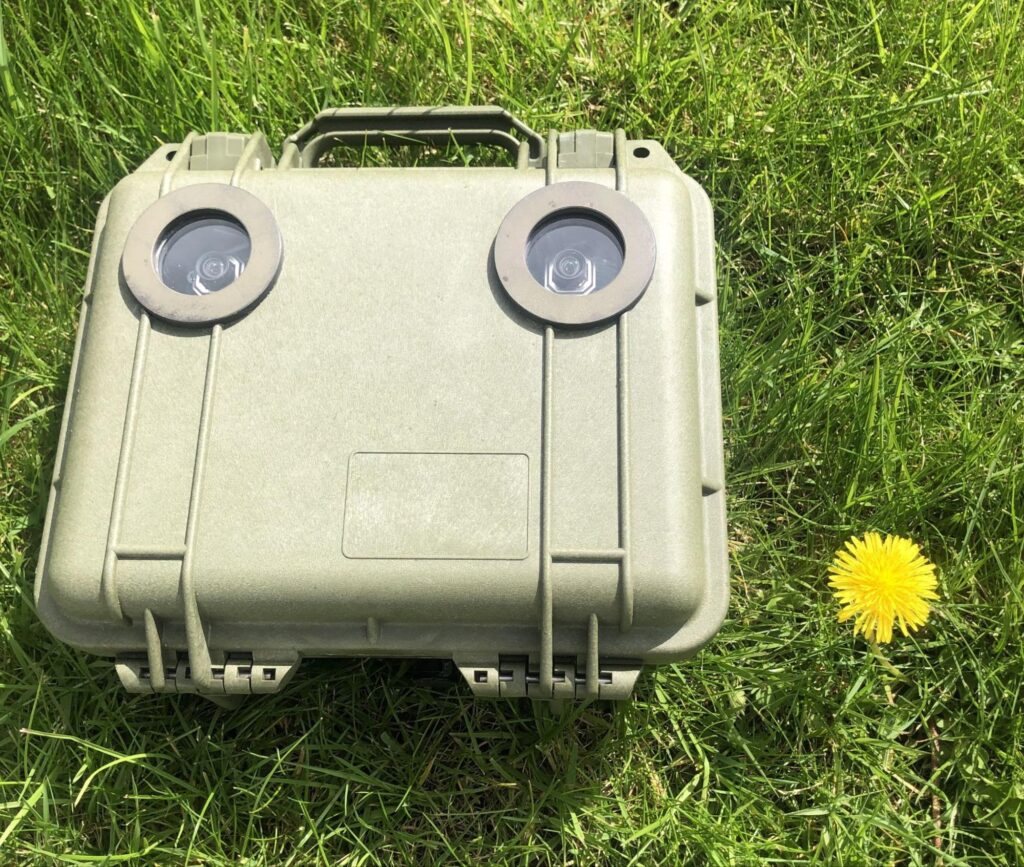
Figure 1 CamBox Standard hardware configuration
Edge Intelligence and Data Security
Processing video data locally rather than transmitting raw footage to remote servers offers several operational advantages for AI video surveillance. The onboard AI performs detection, classification, and tracking operations in real time, reducing bandwidth requirements and enabling a faster response to high-priority events. When the system identifies predefined conditions, such as unauthorized access to restricted areas or missing safety equipment, it generates immediate alerts for video management systems (VMS) rather than waiting for human review. This edge computing approach also addresses privacy concerns by analyzing footage locally and transmitting only metadata and flagged events. All data transfers occur through encrypted channels, providing end-to-end protection from capture to storage.
Edge-Based Video Analysis
The system processes video data locally and executes on-device computer vision and machine learning pipelines without reliance on external processing. Detection, recognition, and tracking are performed directly on the device, including identification of personnel and equipment, real-time movement analysis, and spatial analysis such as distance estimation and orientation tracking.
Running these pipelines on-device reduces network load and latency, allowing the system to respond immediately when predefined conditions are met, for example, entry into restricted areas or absence of required safety equipment. Alerts are generated automatically at the time of detection rather than after manual review of recorded footage.
Local processing also limits the amount of visual data transmitted off-site. Only derived outputs, such as event metadata or selected flagged segments, are sent over the network. All data transfers use encrypted channels to protect information during transmission and storage, addressing privacy and security concerns associated with continuous video monitoring.
Connectivity and Integration
Multiple communication protocols ensure reliable data transmission across varied infrastructure conditions. Built-in Wi-Fi provides high-bandwidth connectivity, while the 4G cellular module enables deployment in remote locations without existing networks. GPS integration timestamps and geotags all recordings, creating verifiable audit trails for compliance documentation.
- Mesh Networking. In areas with weak connectivity, CAMBOX PRO units create redundant data paths to route information through neighboring devices.
- Field Configuration. Bluetooth pairing allows technicians to check status and adjust settings in the field via smartphone without a central console.
Practical Airport Operations Use Case
The practical utility of the CAMBOX PRO system is demonstrated in high-security environments such as airport ground operations. Critical infrastructure areas, including aircraft gates, fuel storage zones, and service roads, require continuous oversight to reduce safety risks and security breaches. Traditional monitoring relies on manual surveillance, which is often reactive and subject to human error.
The system utilizes its edge AI and stereo vision capabilities to analyze complex activity patterns continuously. It is programmed to identify and immediately flag incidents that meet specific safety or security criteria, such as unauthorized intrusions, unsafe vehicle movements, or personnel missing required Personal Protective Equipment (PPE).
When a violation is detected, the system generates real-time alerts that provide operations staff with the full video context of the event. This targeted approach significantly reduces response times to genuine incidents while simultaneously creating a detailed digital record. These logs serve as verifiable audit trails, essential for regulatory safety audits and long-term compliance reviews.
Technical Architecture
The edge AI hardware system uses several integrated subsystems (Figure 2). High-resolution sensors capture data while AI processors run computer vision algorithms. Onboard sensors, including gyroscopes and compasses, provide orientation data to help map the visual field. A power management system regulates distribution and monitors battery health.
The software utilizes a tiered architecture. Low-level firmware manages hardware and sensor data. Computer vision pipeline processes image streams to detect, track, and estimate distances. Higher-level logic applies rules to decide when to trigger an alert.
The system is self-maintaining through automated checks. Continuous telemetry tracks performance, signal strength, storage, and battery status. If a sensor fails or a connection drops, recovery protocols try to fix the issue automatically before notifying an operator.
Table 1. CAMBOX PRO Hardware Modules and System Specifications
| Category | Components |
| Core Hardware | Arducam HQ Cameras, Jetson, Power Control Board, Battery Board |
| Communication | WiFi Module, 4G + GPS Module, Bluetooth |
| Connectivity | Magnetic Connectors |
| Thermal & Mechanical | Fan, Rugged IP67-rated Crush-resistant Enclosure |
| Sensors | Electronic Compass, Altimeter, Accelerometer, Gyroscope |
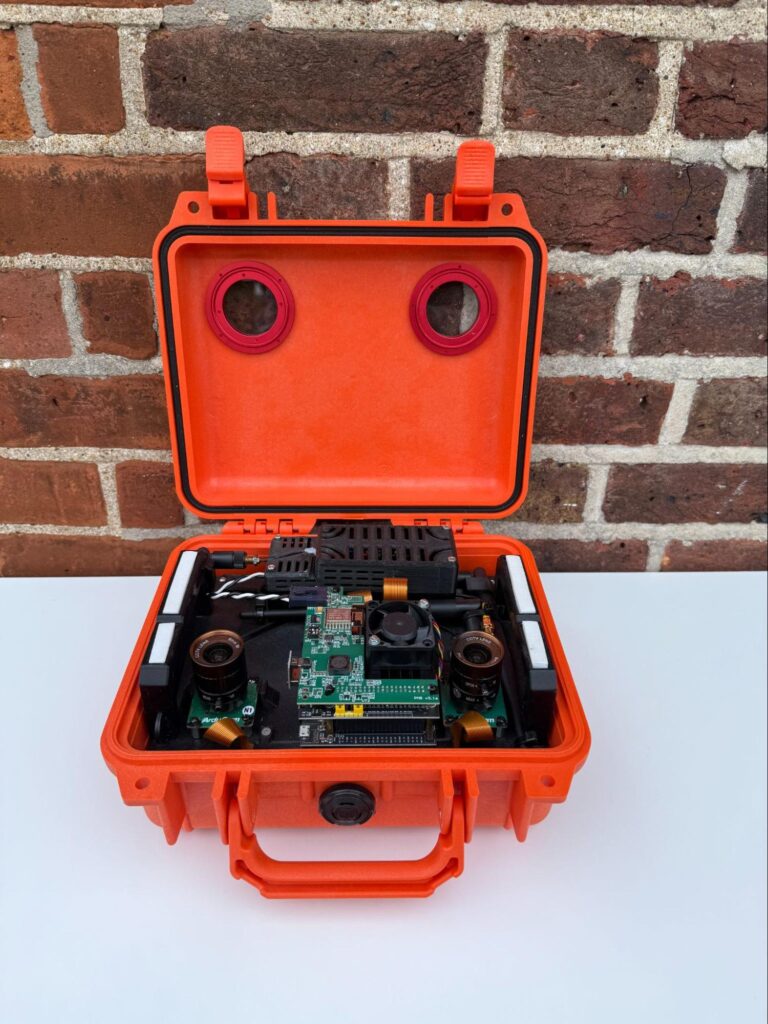
Figure 2 CamBox internal hardware configuration
Hardware Configuration Options
The system is available in two hardware configurations (Figure 3) designed for specific operational requirements:
- Standard CAMBOX PRO (270 x 246 x 124 mm). This configuration is designed for tasks requiring stereoscopic vision and depth estimation. It features dual 4K Arducam HQ cameras and a full sensor suite, including a gyroscope, accelerometer, electronic compass, and altimeter. The internal architecture utilizes a performance-oriented battery board to support intensive Edge AI computation and real-time spatial analysis.
- CAMBOX PRO Mini (232 x 192 x 111 mm). A compact configuration utilizing a single 4K camera for monocular vision. This version is optimized for reduced power consumption and features an endurance-oriented battery for extended autonomous deployment. While maintaining core Edge AI and connectivity features, the Mini version provides a smaller footprint for installations with significant space or runtime constraints.
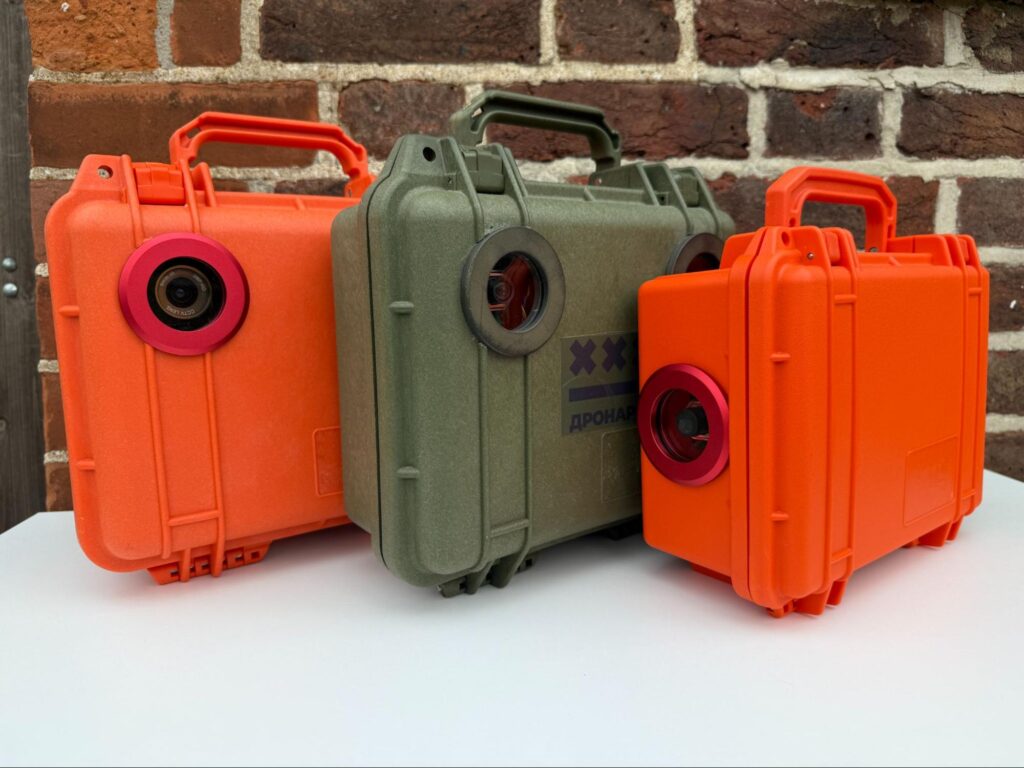
Figure 3 CamBox hardware configurations
Development Evolution
The current system is the result of nearly ten years of iterative design and testing. Early prototypes in 2016 demonstrated basic single-camera object detection running on minimal hardware. Subsequent versions progressively added capabilities stereo vision, weatherproofing, enhanced sensors, and improved AI models based on field experience and user requirements.
This gradual approach allowed continuous refinement of both hardware reliability and software intelligence. Lessons learned from real-world deployments directly informed design decisions in subsequent generations, resulting in a mature platform that addresses practical operational challenges rather than theoretical specifications.
- 2016. Development of the initial experimental prototype utilizing a Raspberry Pi architecture for single-camera object detection.
- 2020. Implementation of optical character recognition (OCR) and fundamental machine learning (ML) algorithms into the system’s early prototypes.
- 2021. Introduction of the CAMBOX PRO, integrating stereoscopic vision capabilities and a specialized waterproof housing.
- 2023. Version 1.2 release, featuring the integration of altitude and orientation sensors for enhanced spatial telemetry.
- 2025. Version 1.3 release, incorporating Bluetooth connectivity and magnetic connectors; concurrent introduction of the compact CAMBOX PRO Mini variant.
Practical Deployment
Implementing CAMBOX PRO begins with a site survey and positioning to ensure optimal coverage of target areas. Units mount on existing infrastructure or temporary stands, depending on deployment duration. Power connections or battery installation follow, then network configuration to establish communication paths back to the central monitoring infrastructure.
Once operational, the system requires minimal ongoing intervention:
- Regular tasks involve reviewing flagged events, validating detection accuracy, and downloading archived footage for long-term storage.
- Automated updates can deploy refined AI models or software improvements without physical access to deployed units.
The workflow transforms raw footage into ready-to-use data, moving beyond simple video archiving. By replacing passive recording with active analysis, the system cuts down the manual labor required to monitor and interpret visual feeds.
Conclusion
The CAMBOX PRO system presents an integrated approach to autonomous industrial video monitoring through the use of on-device computation and stereoscopic vision. This architecture enables local execution of perception, spatial analysis, and event detection functions, reducing reliance on centralized processing and continuous data transmission.
The described design supports deployment in distributed industrial environments, including locations with limited or variable network availability. By maintaining core analytical functions on the device, the system ensures continuity of monitoring and preserves the consistency of spatial and temporal measurements under constrained operating conditions.
The framework establishes a technical basis that may be considered for further systematic study and practical application of edge-based video analytics in industrial safety, compliance verification, and operational monitoring scenarios requiring real-time analysis and autonomous operation.
Put it to work
If you are specifying hardware for a live site, the enclosure and power budget decide more than the model does. Tell us about your site, and we will help you scope it.