
Unstructured Data Agent
Unstructured Data Agent
The Unstructured Data Agent reads documents, images, and video, then produces structured outputs that move straight into your existing workflows.
Most Data Stays Unused
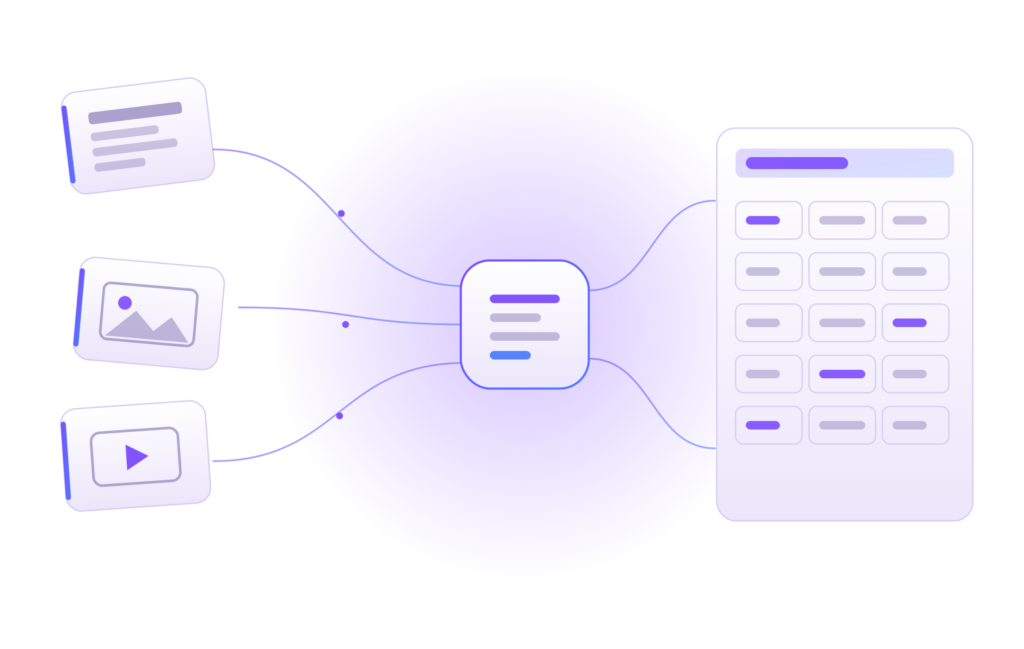
Most enterprise data never reaches a database. It resides inside PDFs, scanned forms, email threads, and recorded videos, where no query can reach it.
Extracting it by hand is slow and inconsistent, and the cost grows with every document that arrives. The Unstructured Data Agent ingests raw inputs in any common format and returns structured records your systems already understand.
One Agent Across Inputs
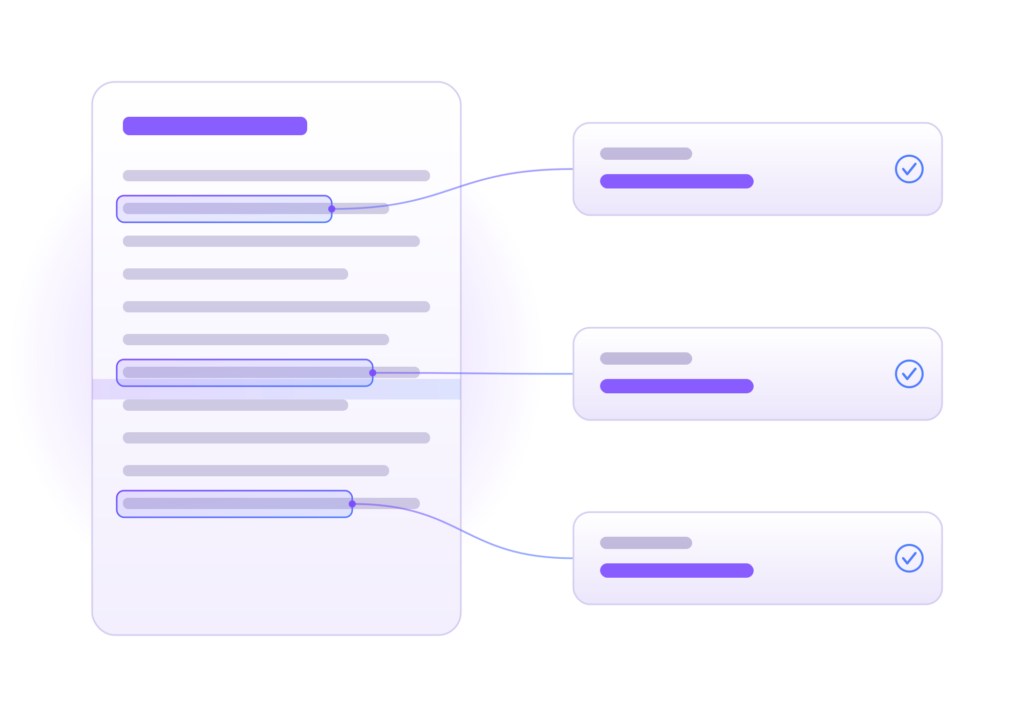
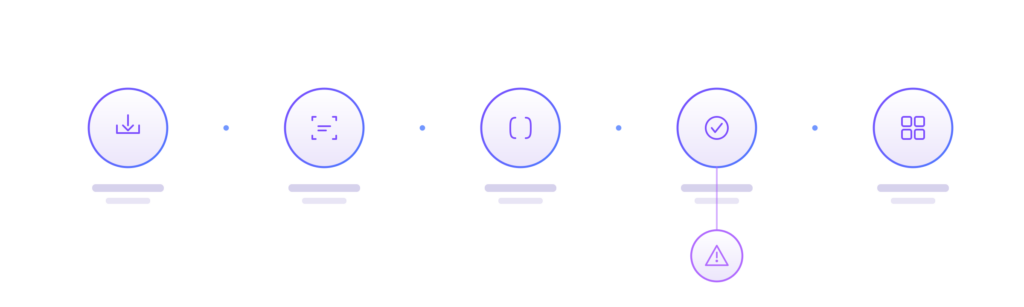
The agent runs inside DXHub as part of DeepX’s agentic AI solutions. It applies OCR and layout analysis to each document, then maps the text and entities it finds to the fields your workflows expect.
Images and video move through the same pipeline, with anomaly detection flagging anything outside expected patterns. Every result lands in a structured format your systems can query through an API.
What The Agent Ingests
The agent reads the formats your operations already produce.
PDFs
Our agents plan each step, act across your systems, and carry every task through to a finished, fully recorded outcome.
Word Documents
It reads structured and freeform Word files and extracts the fields buried in dense text.
Emails
It processes email bodies and attachments together, keeping threads and metadata intact.
Scanned Images
OCR recovers text from photographed and scanned pages, even at low resolution.
Video Files
The agent extracts transcripts, frames, and on-screen text from recorded video.
Handwritten Forms
Handwriting recognition converts filled forms into structured fields with a confidence score.
Clean Records Everywhere
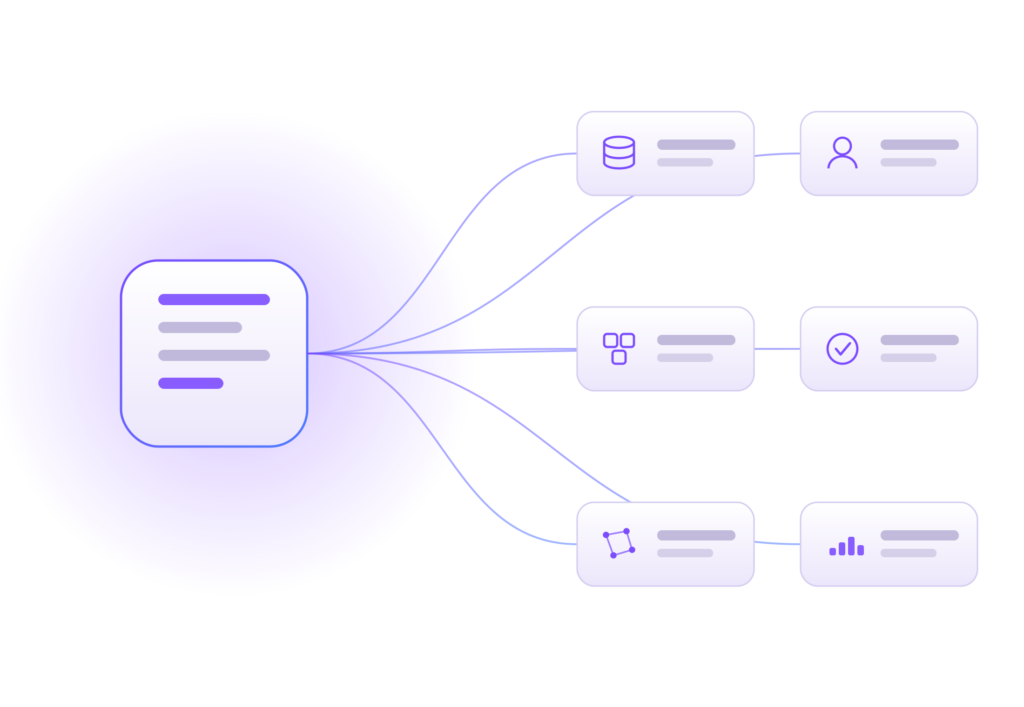
The agent writes output in the formats your systems already accept, including JSON, structured tables, and key value records. Each record carries the source reference and a confidence score, so every value stays traceable to its origin. From there the data moves into the destination you choose. The agent connects through standard APIs, which keeps integration work small and predictable.
Databases
Structured records land in SQL and NoSQL stores ready for query.
CRMs
Extracted entities update customer and account records without manual entry.
ERPs
Line items and document data sync into your resource planning system.
Approval Workflows
Parsed documents trigger routing and sign off in existing processes.
Vector Databases
Embeddings flow into vector stores for retrieval and semantic search.
Analytics Platforms
Clean structured data feeds dashboards and reporting tools directly.
Oversight On Every Record
Set the rules once, and every agent operates inside them, from who can act to what gets recorded.
Audit Trails
Every extraction records the source, the model version, and the confidence behind each field.
Confidence Scoring
Uncertain results route to a human checkpoint before they reach your systems.
Role-Based Access
Access rules control who can view and approve each step of a workflow.
On-Prem Option
Run the agent on-prem when data cannot leave your environment.
DXHub
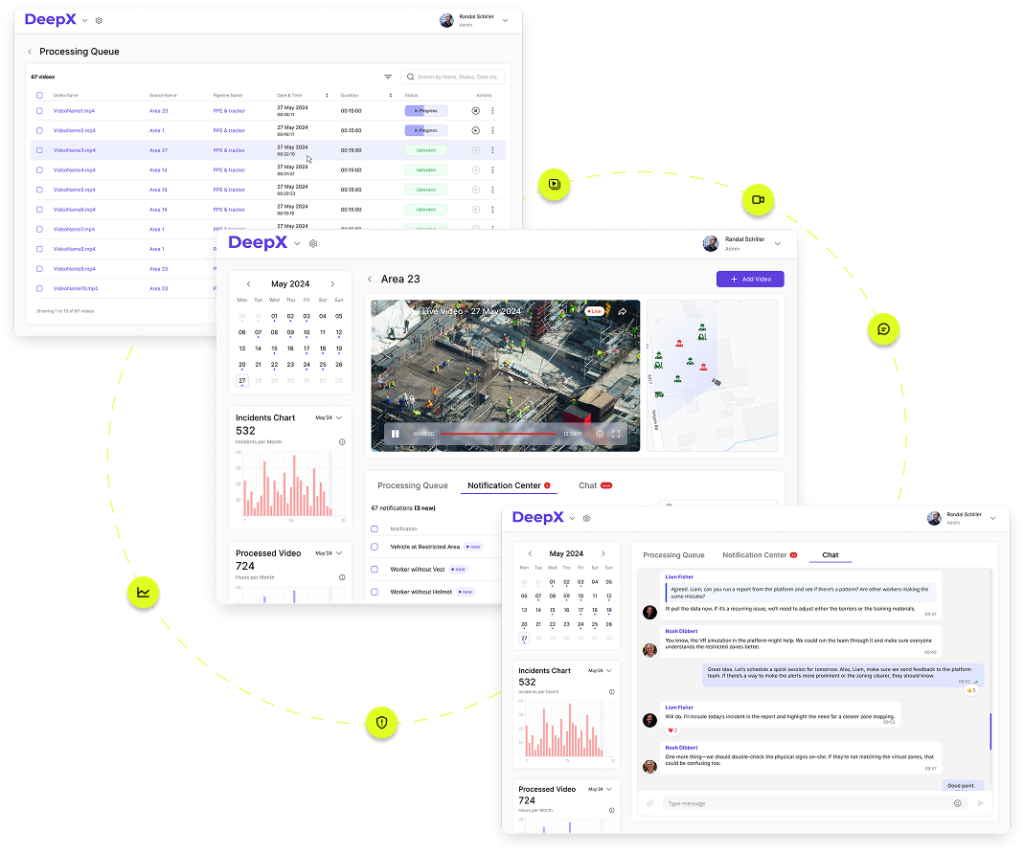
DXHUB is a modular AI Platform.
It takes fragmented video, documents, and multimodal inputs and converts them into structured, searchable, model-ready data without requiring changes to your existing infrastructure.
Transforms raw data into AI-ready formats
Unifies video, documents, and sensors
AI chat for quick summaries and guidance
Industries We Transform
Automate PPE checks, site safety audits, and equipment tracking with real-time computer vision.
Securely process
documents, control access, and detect incidents in hospitals with AI.
Automate claim reviews
and document validation
with AI-powered data extraction.
See it run on your documents
Select one document workflow that slows down your team. We will run the Unstructured Data Agent against your own inputs and show the structured output.
Frequently Asked Questions
What documents can the Unstructured Data Agent process?
It handles PDFs, Word files, emails, scanned images, recorded video, and handwritten forms. Native digital files and low quality scans both pass through the same OCR and extraction pipeline.
How does agentic AI differ from a single language model?
A language model generates a response to one prompt, while an agentic system plans, retrieves, validates, and acts across steps. That difference between agentic AI and an LLM is what lets the agent run a full document workflow end to end.
What accuracy can we expect?
Accuracy varies by workflow complexity and data quality. Structured tasks (invoice processing, data extraction) typically hit 90-95%+ after tuning. Judgment-heavy workflows (screening, moderation) range from 75-90%. We set confidence thresholds for human review, track precision/recall metrics in real-time, and improve continuously through feedback loops. You control the risk-accuracy tradeoff.
How does it handle low quality scans and handwriting?
OCR and handwriting recognition recover text from poor scans and filled forms, and each field carries a confidence score. Low confidence values route to a human checkpoint before they reach your systems.
Does it suit regulated industries like insurance and healthcare?
Audit trails, confidence scoring, and on-prem deployment support insurance and healthcare compliance requirements. Robotic process automation for healthcare often stops at rigid forms, while this agent reads the varied records those teams actually receive.