Absolutely. The solution is built for oil and gas operational and safety requirements. It includes role-based access control, full audit logging, and encryption both in transit and at rest. Data always remains under your control, with no default model training on customer operational data. The platform can run on isolated on-site infrastructure when required, supporting secure deployments in industrial environments. These practices help meet GDPR, EU AI Act, and SOC 2 compliance standards.
Oil and Gas
AI for Oil & Gas
Energy operations, structured by AI. Real-time visibility across assets, maintenance, and field safety.
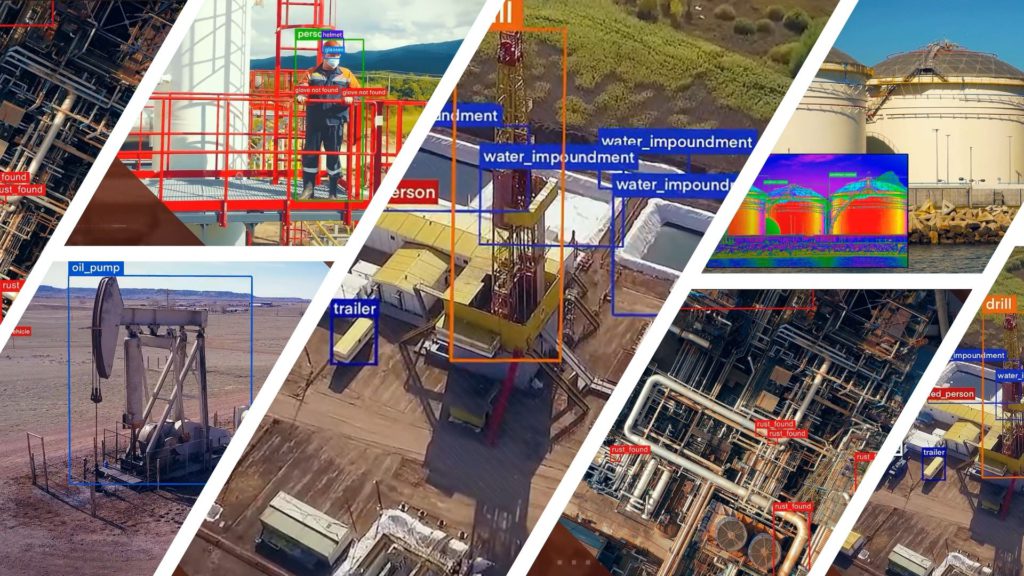
AI for Energy Operations
Oil and gas operations run in high-risk, high-cost environments where safety, uptime, and regulatory compliance are non-negotiable.
Across wells, pipelines, and processing facilities, vast amounts of operational, visual, and document data are generated every day, yet critical decisions often rely on siloed systems and manual interpretation.
Advanced analytics and AI techniques enable earlier detection of anomalies, better production visibility, structured incident investigation, and more consistent, auditable operational control.
Why Energy Uses AI
Oil and Gas companies are applying AI across multiple high-impact operational areas, delivering measurable improvements in safety, production efficiency, and asset performance.
Predictive Maintenance
Early detection of vibration, pressure, and temperature anomalies reduces downtime, lowers maintenance costs, and extends asset life.
Production Optimization
AI fine-tunes setpoints and process parameters to increase throughput and reduce energy use per barrel.
Drilling Automation
Real-time optimization improves drilling speed, reduces non-productive time, and lowers operational costs.
Asset Reliability
Centralized data and predictive models forecast equipment failures, enabling planned intervention instead of reactive repairs
Safety & Compliance
Continuous monitoring detects leaks and abnormal conditions, supporting regulatory compliance and safer operations.
Logistics Optimization
Intelligent forecasting and scheduling minimize disruptions, optimize transport, and reduce inventory costs.
Data & Integration
We use a governed data architecture to unify oil and gas systems while maintaining strict control, security, and compliance across environments.
Existing CCTV and enterprise video surveillance systems
Connects operational, maintenance, and engineering data into one governed layer
Integrates on-prem, cloud, and edge systems using open industry protocols
Enforces access control, encryption, retention policies, and audit logging
Makes enterprise data searchable, structured, and ready for AI models
Supports secure, isolated deployment across hybrid IT and OT environments
Portable Edge AI for Energy
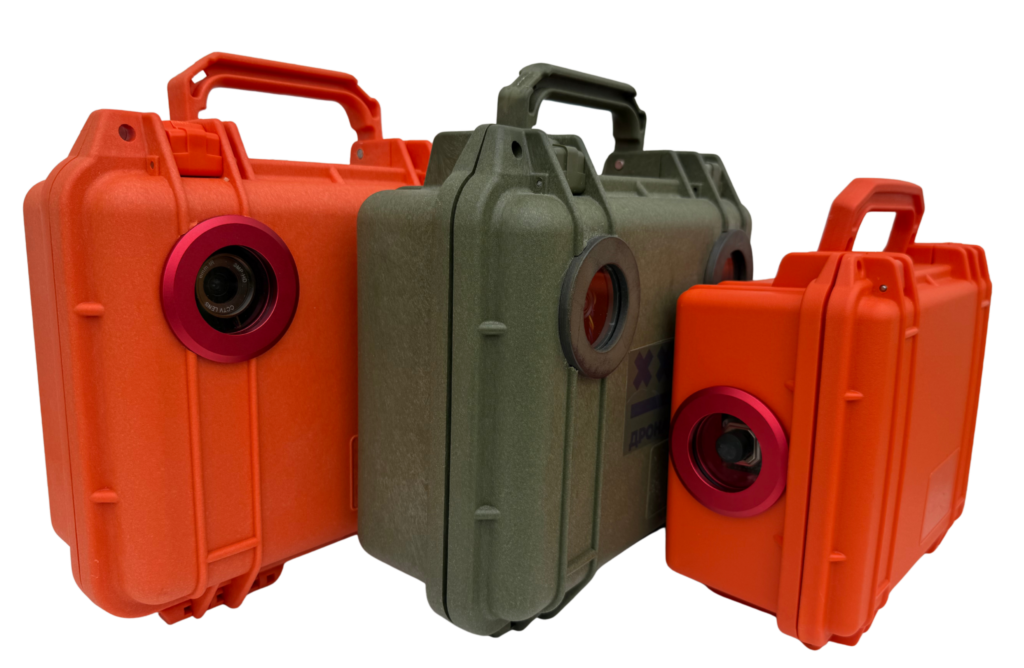
Operational visibility starts at the asset.
CAMBOX PRO is a portable edge AI solution that enables rapid deployment of cameras at wellheads, drilling rigs, processing units, and critical field locations capturing safety- and process-critical activity exactly where operations happen. This approach supports:
- Portable AI camera systems
- Stereo vision AI cameras
- Rugged edge AI vision systems
- Edge AI video analytics devices
Coverage moves with the operation across drilling, maintenance, inspection, and logistics instead of staying tied to fixed infrastructure.
DXHub
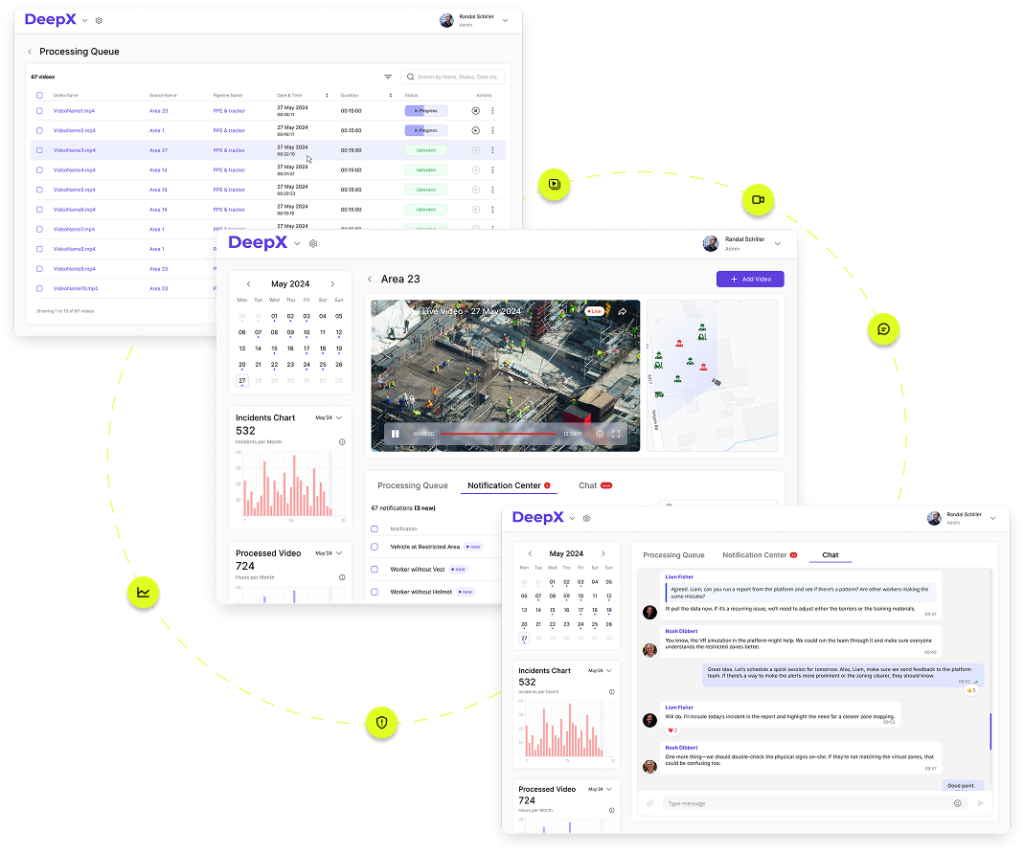
DXHUB is a modular AI Platform.
It takes fragmented video, documents, and multimodal inputs and converts them into structured, searchable, model-ready data without requiring changes to your existing infrastructure.
Transforms raw data into AI-ready formats
Unifies video, documents, and sensors
AI chat for quick summaries and guidance
Featured Case
Intelligent Energy Site Oversight
The Challenge
Oil & Gas facilities operate in high-risk, high-cost environments where safety monitoring, compliance checks, and operational oversight still rely heavily on manual video review and fragmented data.
Our Solution
We deployed DXHub, an AI-powered platform that transforms existing CCTV footage and operational documents into real-time, structured insights detecting safety violations, tracking personnel and equipment, and generating audit-ready evidence without additional hardware.
Results & Impact
The solution reduced manual review time, improved safety compliance, enabled real-time remote supervision of sites, and lowered operational risk and cost across facilities.
How Impact Is Measured
Increase production with AI optimization
Improve safety with real-time monitoring
Optimize energy use and emissions
Extend asset life with predictive maintenance
Prove ROI with KPI tracking
Reduce downtime with early fault detection
Implementation Path
Strategic Discovery
Define use cases, establish KPIs, identify operational risks, and document governance requirements.
Data Readiness
Assess camera coverage, review VMS integration, validate data quality, and prepare edge deployment.
Controlled Pilot
Deploy on selected assets, validate performance, track key KPIs, and document results.
Production Rollout
Scale across operations, enforce access controls, activate audit logging, and formalize oversight.
Continuous Evaluation
Monitor KPI performance, review governance controls, assess model drift, and implement improvements.
Operational Validation
Confirm KPI impact, validate model behavior, document compliance controls, and secure stakeholder approval.
Realization
Your Project
100%
Deploy AI Across Your Oil & Gas Operations
See how AI-powered video analytics and predictive models improve asset uptime, field safety, and regulatory compliance.
Frequently Asked Questions
What are the main applications of AI in the oil and gas industry?
AI and advanced analytics are now used across the oil & gas value chain. Common use cases include predictive maintenance (using sensor data to foresee equipment failures and avoid downtime), production optimization (real-time tuning of process parameters for higher yield and efficiency), drilling automation (AI-driven analysis of seismic and drilling data to plan wells and accelerate drilling), supply chain/logistics (demand forecasting and route optimization to reduce costs), and safety monitoring (computer-vision and IoT analytics to detect hazards like leaks or fires). These AI solutions boost efficiency, extend asset life, and improve safety across wells, pipelines, and facilities.
In what ways does AI support drilling and exploration?
AI dramatically speeds up subsurface analysis and drilling planning. Machine learning algorithms can process seismic and geological data in hours (versus weeks manually) to identify the best drill targets. During drilling, AI (including generative models) can design optimal well trajectories and adjust drilling parameters in real time to avoid problems and maximize the rate of penetration. By combining historical well data with real-time sensor feeds, these AI tools reduce “non-productive” time and help drill more efficiently while minimizing risks.
How can AI improve safety and regulatory compliance?
AI-powered monitoring turns safety on-site into a continuous process. For instance, computer-vision systems can analyze CCTV and sensor feeds to instantly spot safety violations (such as unsealed valves, PPE breaches, red-zone intrusions) or environmental hazards (leaks, spills). When a hazard is detected, the system issues immediate alerts (to supervisors or control rooms) so teams can respond before incidents escalate. By automating hazard detection, AI reduces reliance on human monitoring and proactively prevents accidents. This leads to far fewer incidents and provides audit-ready records, thus strengthening compliance. Industry examples report dramatic drops in injuries and accidents when AI analytics are applied to field safety.
How can AI improve supply chain and logistics in oil and gas?
AI enhances supply chain resilience and efficiency through better forecasting and planning. Advanced demand-forecasting models use market and production data to predict inventory needs, reducing stockouts or excess inventory. On the logistics side, AI algorithms optimize shipping routes and schedules, ensuring timely deliveries at minimal cost. In practice, these tools can automatically adjust for disruptions (rerouting trucks if a road is closed, for example) and better utilize assets. Studies show that AI-driven supply-chain systems significantly improve delivery reliability and reduce transportation and inventory costs.
How can AI optimize production and improve process efficiency?
AI systems act like real-time process controllers, continuously adjusting setpoints (flow, pressure, temperature) based on live sensor inputs. In effect, they create a dynamic “digital twin” of the plant that learns from data. This means production units can automatically run closer to their optimal conditions, increasing throughput and reducing energy use per barrel. Numerous implementations report higher yields and lower energy consumption by fine-tuning operations with AI. Faster, data-driven decision-making also helps stabilize output and cope with market volatility more effectively.