Executive Perspective
Modern enterprises operate in environments where physical security directly impacts operational continuity. Manufacturing facilities, logistics hubs, airports, data centers, and corporate campuses all contain areas with different levels of criticality. Access to these areas must be strictly regulated, and any unauthorized movement must be detected immediately.
An Access Controlled Zone is a structured approach to defining and enforcing physical boundaries that cannot be crossed without proper authorization. By integrating AI-powered video analytics, computer vision analytics, and real-time video analytics, organizations move beyond passive surveillance. Instead of simply recording incidents, the system actively identifies boundary violations as they happen.
Access Exposure
Permissions and physical access rights can accumulate over time. Employees may change roles without proper updates to their access, and temporary permissions can become permanent. This creates hidden exposure across sensitive areas, increasing the risk of unauthorized entry.
Even with business video surveillance, AI video surveillance, or a CCTV camera for business, effectiveness is limited without clear governance. An integrated anomaly detection system, combined with object tracking, enhances real-time visibility, but only when aligned with established access rules and executive oversight.
Controlled Architecture
An Access Controlled Zone structures facilities into regulated areas where entry is strictly assigned based on defined roles and verified authorization. Centralized logs capture every access attempt, providing full traceability and accountability.
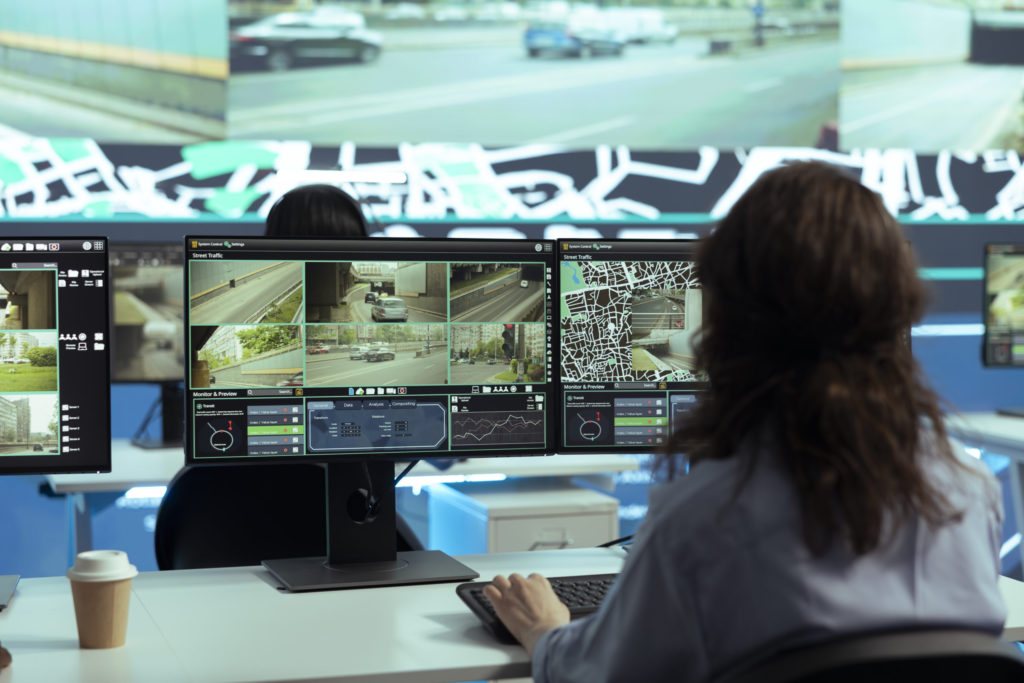
Video intelligence and executive video analytics dashboards consolidate insights across locations, enabling leadership to monitor critical areas effectively. Integrating intelligent video surveillance with AI security camera software ensures that access control is proactive, not just passive observation.
Design Principles
The framework connects policy with technical enforcement to ensure consistent, auditable security.
- Role-based access is aligned with the organizational hierarchy.
- Multi-factor authentication for high-security areas.
- Segmented infrastructure with defined control layers.
- Centralized logging to support audits.
- Compliance-aligned access policies across all zones
Supporting technologies such as camera analytics, cloud video surveillance, and advanced AI camera deployments enable real-time incident detection and structured perimeter monitoring. Features like human pose estimation and perimeter intrusion detection systems are strengthened through machine learning anomaly detection, creating a proactive physical security environment.
Executive Value
For CEOs, physical access governance must deliver measurable outcomes. Limiting unnecessary access reduces operational risk and strengthens accountability across sensitive areas.
Integration with intelligent video analytics software and enterprise video monitoring system infrastructure ensures audit readiness and consistent enforcement of access policies. Scalable design allows facilities to expand while maintaining governance integrity across buildings, zones, and operational units.
DXHub Platform
DXHub→ enables practical implementation of Access Controlled Zones within a single, unified ecosystem.
- Centralized management of identity and access.
- Dynamic role configuration aligned with HR and operational functions.
- Executive dashboards for real-time monitoring.
- Seamless integration with enterprise systems.
- Scalable control across multiple sites.
By combining AI-based video monitoring, computer vision cameras, and embedded object detection models, DXHub→ transforms access policies into actionable, real-time enforcement, ensuring continuous oversight of physical zones.
Conclusion
Physical access governance is a board-level responsibility. Without structured control, unmanaged permissions, and fragmented surveillance create significant operational risk.
Access Controlled Zones establish defined boundaries, enforce accountability, and provide executive visibility. Leveraging people counting analytics, computer vision analytics, and AI-powered video analytics, organizations can proactively protect assets, ensure compliance, and maintain long-term operational resilience.
It’s time to work smarter
Got a similar problem? Let’s face it together.
Book a short call to explore how AI can enhance performance, reduce manual effort, and deliver measurable business results.