AI Data Automation
AI Data Automation
AI Data Automation Solutions that turn documents into decisions
Overview
If teams spend hours on manual data entry, corrections, and chasing approvals, AI Data Automation improves that routine work. It identifies document types, extracts the required fields, validates the data, and sends structured output directly into the next system or workflow.
Cut document processing time and reduce manual effort with automated classification and data extraction.
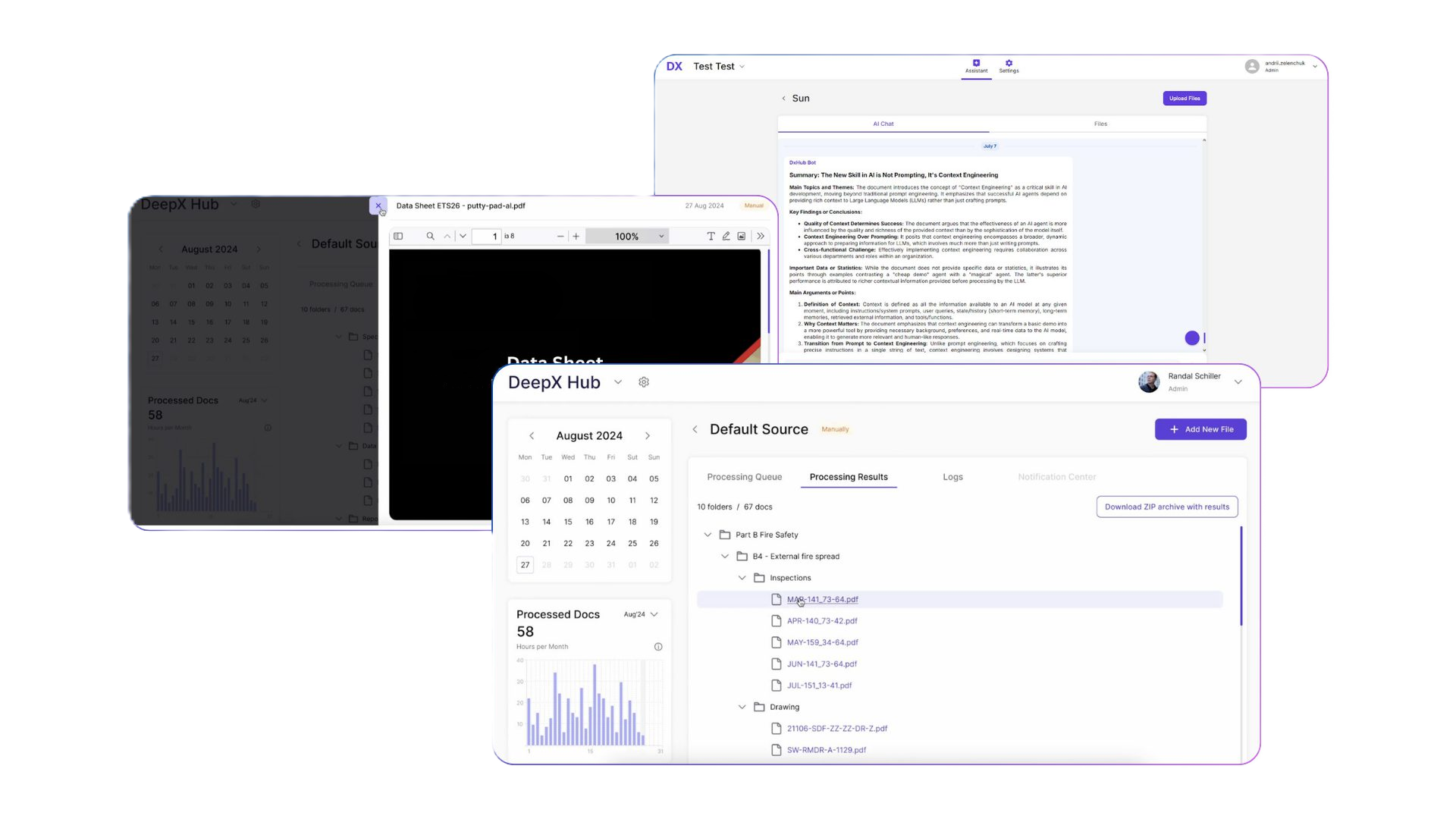
AI Data Automation in Action
Metadata Extraction & OCR
OCR converts scanned files into text, and metadata extraction turns that text into structured, usable data
Integration
Our agents connect to the systems you already use:
API-first JSON outputs for fields and tables
Webhooks and queues for document workflow automation
ERP, CRM, and document management integration
Support for document process automation steps
Enterprise-grade security controls with SOC 2 standards
Scalable architecture for enterprise and developer teams
Trust and Control
Human approvals
SOC 2
Audit trails
HIPPA
Role-based access
Data privacy controls
AI Data Automation Expertise
Multi-Format Support
Process PDFs, scans, emails, images, and handwritten documents in one platform.
High-Accuracy OCR
Enterprise-grade optical character recognition with table and layout detection.
Handwriting Recognition
OCR of handwritten text for forms, claims, and field documents.
Structured Data Capture
Extract key-value pairs, line items, totals, and tables with precision.
Document Classification
Automatically classify documents before applying the right extraction schema.
Report Generation
Generate summaries and structured reports using LLM-powered document intelligence.
How It Works
Classification
Automatic document classification
Extraction
Structured data extraction
Validation
Data accuracy validation
Output
Processed data output
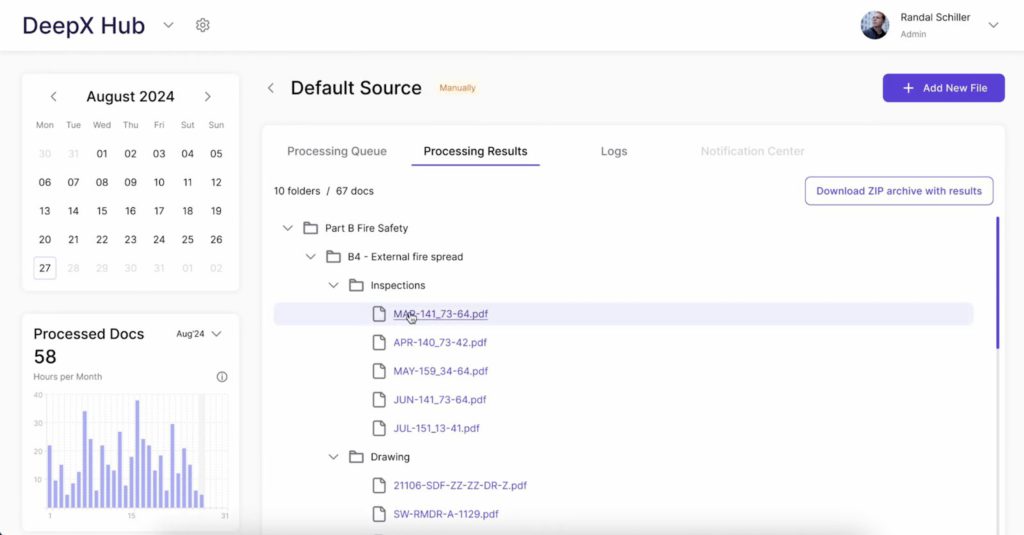
DXHub
DXHUB is a modular AI Platform.
It takes fragmented video, documents, and multimodal inputs and converts them into structured, searchable, model-ready data without requiring changes to your existing infrastructure.
Transforms raw data into AI-ready formats
Unifies video, documents, and sensors
AI chat for quick summaries and guidance
Industries We Transform
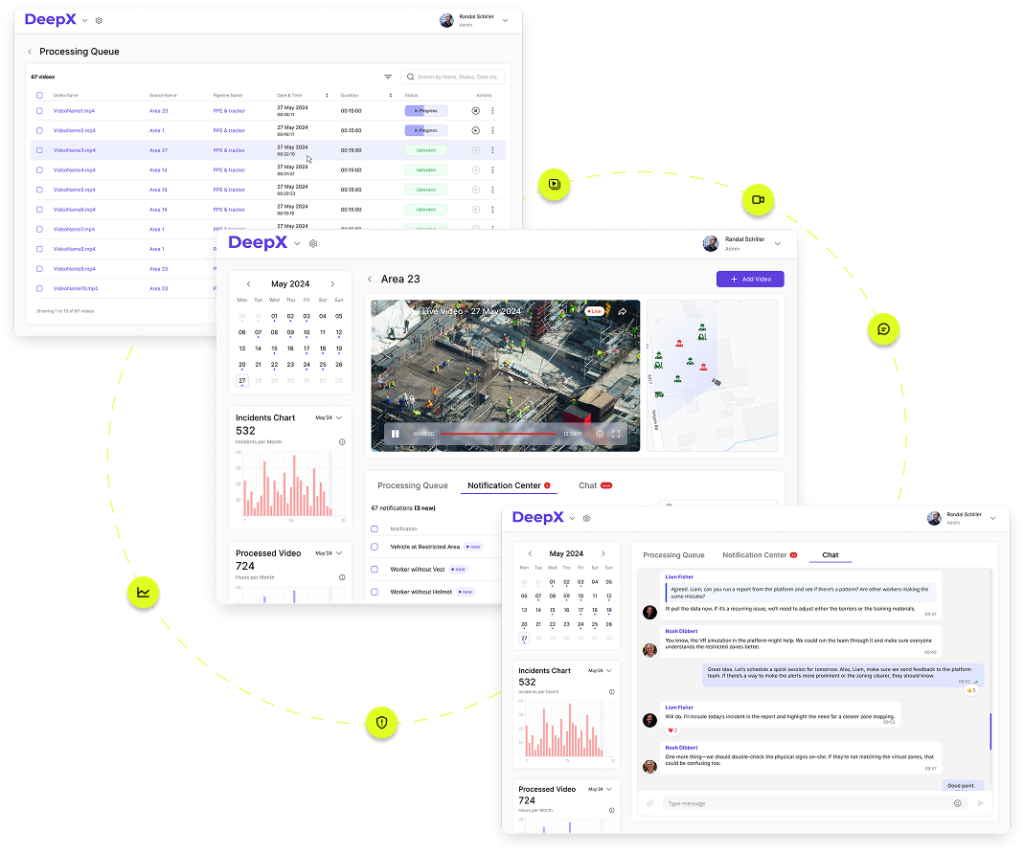
Automate PPE checks, site safety audits, and equipment tracking with real-time computer vision.
Securely process
documents, control access, and detect incidents in hospitals with AI.
Automate claim reviews
and document validation
with AI-powered data extraction.
Ready to automate document processing without losing control?
Submit your documents and workflow goals, and we’ll respond with a recommended approach.
Frequently Asked Questions
What’s the difference between OCR and AI Data Automation?
OCR software focuses on converting scanned documents, images, or PDFs into machine-readable text. AI Data Automation, also known as Intelligent Document Processing (IDP) goes further. It combines OCR with document classification, structured data extraction, and machine learning models to process unstructured documents and turn them into usable business data.
Can you handle handwriting OCR?
Yes. Modern AI-powered OCR models can recognize both printed and handwritten text, depending on document quality and language support. Handwriting recognition typically includes confidence scoring and positional metadata to support review, validation, and automated decision logic within enterprise document workflows.
Do you support extracting tables from PDFs?
Yes. Intelligent document processing systems can extract structured data from complex PDFs, including tables, key-value pairs, and multi-column layouts. AI document automation platforms are designed to convert semi-structured and unstructured PDFs into structured outputs suitable for downstream systems such as ERP, CRM, finance, and other platforms.
Can your AI tool process PDF files end-to-end?
An enterprise document AI solution can process PDFs and scanned files through a complete automation pipeline, transforming raw documents into structured, validated data outputs ready for business systems. This supports use cases like invoice processing, claims automation, compliance documentation, contract analysis, and large-scale unstructured data processing.
Is a self-hosted LLM an option for sensitive documents?
For organizations operating in regulated industries (finance, healthcare, legal, insurance), a self-hosted LLM or private large language model deployment can provide tighter control over data governance, privacy, and risk management. Self-hosted AI environments support advanced document understanding tasks such as summarization, metadata extraction, and contextual data analysis while maintaining full infrastructure control.
Is your AI Data Automation platform secure?
Our AI Data Automation platform is designed for secure enterprise use and aligned with SOC 2 security principles. Core safeguards include encryption, role-based access control (RBAC), audit logging, and monitored infrastructure. Private cloud and self-hosted LLM deployment options allow organizations to maintain control over sensitive and regulated data.