Coverage moves with the project across building, equipment operation, site inspections, and material logistics instead of staying tied to fixed infrastructure.
Construction
AI for Construction
Real-time monitoring of workers, equipment, and site activity using AI video analytics.
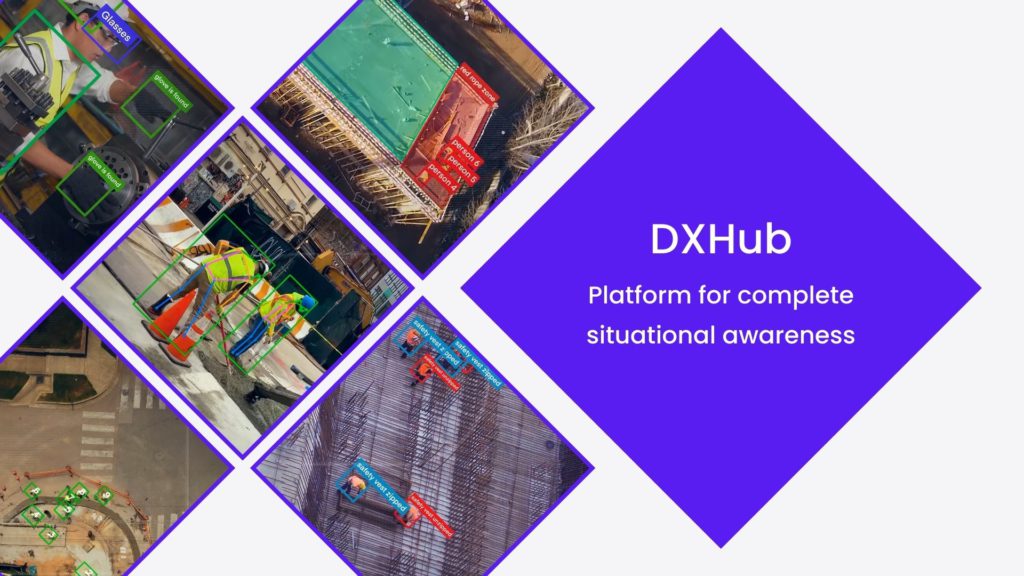
AI for Construction Sites
Construction projects generate constant activity across multiple zones, contractors, and vehicles. Yet most construction sites still rely on manual supervision and passive CCTV systems.
DeepX combines computer vision, AI video analytics, and intelligent video management systems (VMS) to transform construction cameras into operational intelligence.
The platform continuously analyzes live video streams to detect safety risks, monitor activity, and provide real-time alerts across the entire site.
Why Construction Uses AI
Construction companies deploy AI video analytics to improve safety, security, and productivity.
Safety Monitoring
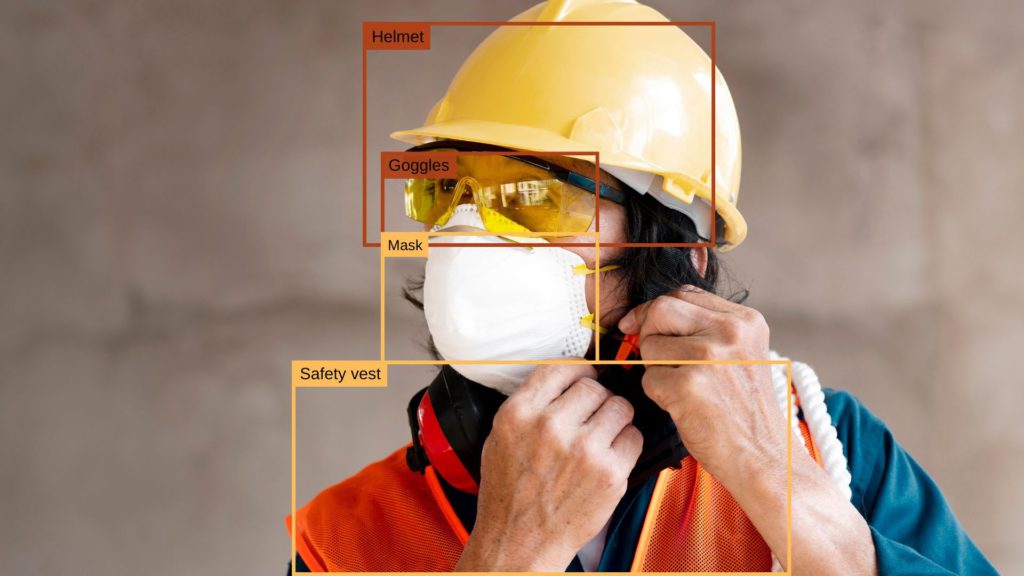
Detect unsafe behavior, missing PPE, and hazardous worker proximity to machinery using real-time AI video analytics.
Perimeter Security
Identify unauthorized entry, after-hours movement, and suspicious vehicle activity with automated perimeter intrusion detection.
Equipment Tracking
Track machinery movement, vehicle access, and logistics flow across the site using intelligent computer vision monitoring.
Workforce Insights
Analyze worker distribution, movement patterns, and activity levels using people detection and multi-object tracking.
Shift Productivity
Track workforce activity, shift efficiency, and operational productivity using AI analysis of site movements and activity patterns.
Incident Detection
Automatically detect safety violations, security incidents, and abnormal site activity with continuous AI video monitoring.
Data & Integration
DeepX integrates with existing video surveillance systems, VMS platforms, and cloud video surveillance infrastructure.
The platform processes live feeds from:
Commercial surveillance camera systems
Business CCTV camera networks
Enterprise video surveillance systems
Cloud-based CCTV solution
Edge AI cameras
Portable Edge AI for Construction
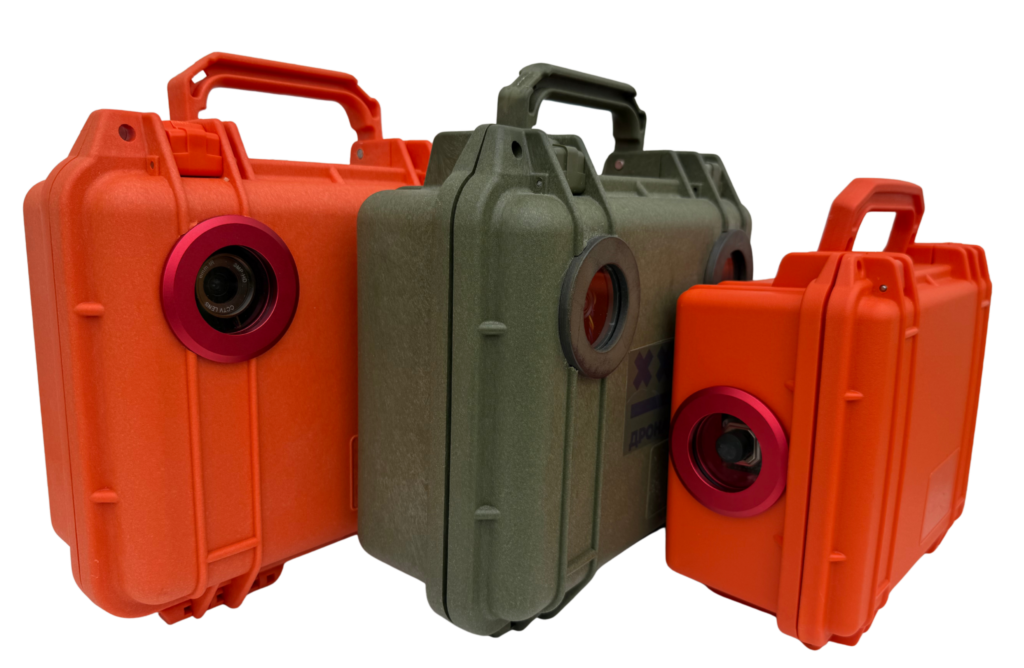
Operational visibility starts at the asset.
CAMBOX PRO is a portable edge AI solution that enables rapid deployment of cameras across construction sites, including work zones, equipment areas, and site entry points, capturing safety- and operations-critical activity exactly where work happens. This approach supports:
- Portable AI camera systems
- Stereo vision AI cameras
- Rugged edge AI vision systems
- Edge AI video analytics devices
DXHub
DXHUB is a modular AI Platform.
It takes fragmented video, documents, and multimodal inputs and converts them into structured, searchable, model-ready data without requiring changes to your existing infrastructure.
Transforms raw data into AI-ready formats
Unifies video, documents, and sensors
AI chat for quick summaries and guidance
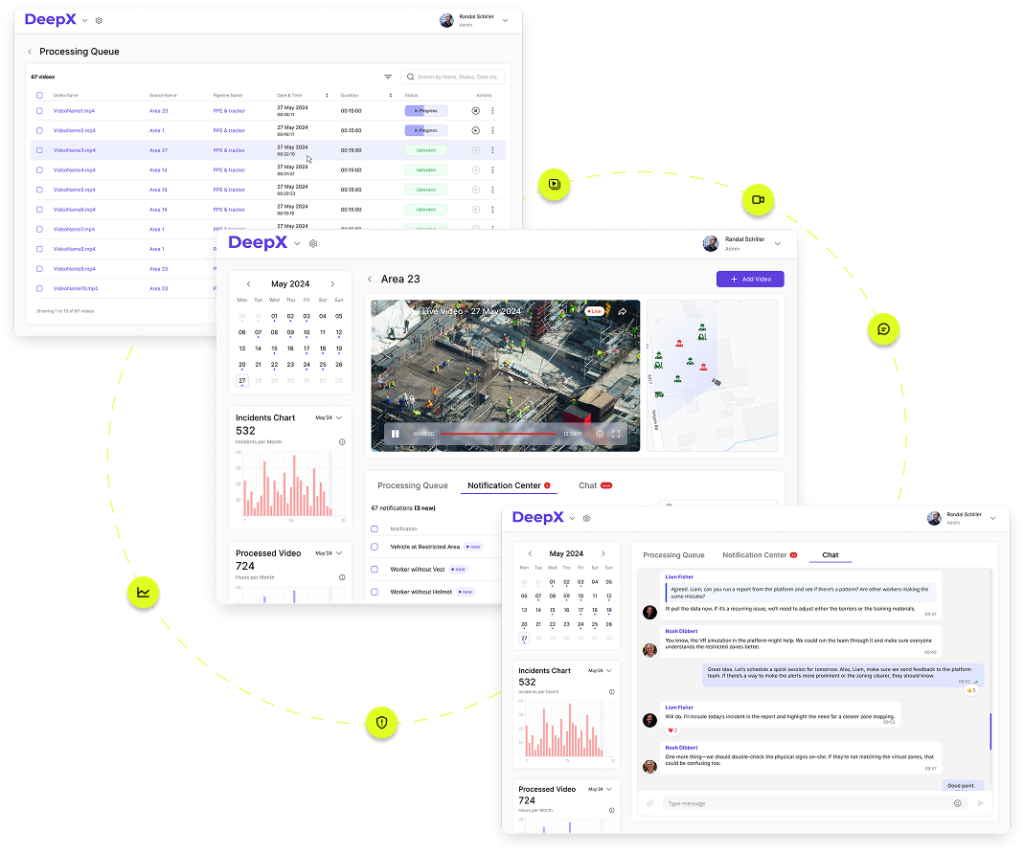
Featured Case
Intelligent Construction Site Oversight
The Challenge
Large construction sites required manual monitoring of hundreds of camera feeds, making it difficult to detect safety risks in real time.
Our Solution
DeepX deployed AI-powered video analytics, integrated with the existing VMS and camera security systems, for businesses. Computer vision models analyzed live feeds to detect PPE violations, restricted zone entry, and vehicle activity.
Results & Impact
The construction team gained continuous site visibility, faster incident detection, and automated safety monitoring across the project.
How Impact Is Measured
Reduce manual CCTV monitoring hours
Decrease safety violations across the site
Accelerate incident investigation time
Improve visibility across active construction zones
Increase PPE and safety compliance
Minimize perimeter breaches and unauthorized access
Implementation Path
Strategic Discovery
Define use cases, establish KPIs, identify operational risks, and document governance requirements.
Data Readiness
Assess camera coverage, review VMS integration, validate data quality, and prepare edge deployment.
Controlled Pilot
Deploy on selected assets, validate performance, track key KPIs, and document results.
Production Rollout
Scale across operations, enforce access controls, activate audit logging, and formalize oversight.
Continuous Evaluation
Monitor KPI performance, review governance controls, assess model drift, and implement improvements.
Operational Validation
Confirm KPI impact, validate model behavior, document compliance controls, and secure stakeholder approval.
Realization
Your Project
100%
Activate AI video monitoring for real time safety and security alerts.
Expand monitoring across additional cameras, zones, and construction projects using cloud or edge AI infrastructure.
Frequently Asked Questions
How can computer vision improve site safety?
Computer vision acts like an extra set of eyes on the jobsite, monitoring conditions 24/7. It uses cameras and AI models (often convolutional neural nets) to detect unsafe situations automatically. For example, our AI safety system can spot a worker without a hard hat or safety vest and immediately send an alert. It can recognize missing guardrails or workers working at heights without fall protection and warn supervisors in real time. By catching hazards (falls, poor housekeeping, improper PPE) as they happen, AI helps prevent accidents before they occur.
What hazards can AI-based video analytics detect?
AI video analytics can identify a wide range of construction hazards. Our detection include: Fall risks (detecting missing guardrails, open edges, or workers not using harnesses); Heavy equipment collisions (spotting workers too close to moving cranes, trucks, or excavators); Unstable structures or material issues (such as improperly stacked materials that could collapse); and PPE non-compliance (workers lacking hard hats, vests, and gloves). Advanced systems use pattern recognition and pose estimation they learn normal site activities and flag anomalies, like a sudden fall or a worker entering a restricted zone without authorization.
What is AI-driven progress tracking in construction?
Computer vision can automatically track project progress by comparing what’s actually built to what was planned. Using object detection models (like YOLO) on site photos or videos, AI identifies building components (walls, pipes, equipment) and measures completion percentages. It generates visual progress reports so project managers can see delays early. The AI even forecasts when delays will occur based on historical build rates. In short, AI progress tracking replaces laborious manual status updates with real-time, fact-based insights that keep large projects on schedule.
How does AI help project scheduling and forecasting?
By analyzing historical project data, AI can flag schedule risks and optimize planning. For instance, AI tools review past schedules versus actual completion and highlight tasks that typically run late. If framing work always overruns in cold weather, AI will flag that pattern for plans. This insight allows schedulers to adjust timelines or add contingencies in advance.
How can AI optimize production and improve process efficiency?
AI systems act like real-time process controllers, continuously adjusting setpoints (flow, pressure, temperature) based on live sensor inputs. In effect, they create a dynamic “digital twin” of the plant that learns from data. This means production units can automatically run closer to their optimal conditions, increasing throughput and reducing energy use per barrel. Numerous implementations report higher yields and lower energy consumption by fine-tuning operations with AI. Faster, data-driven decision-making also helps stabilize output and cope with market volatility more effectively.
Can AI systems count and track workers on-site?
Yes. Computer vision systems can analyze video feeds to detect and track people across monitored areas. They can count the number of workers present, monitor movement paths, and identify activity patterns within specific zones. This helps managers understand workforce distribution, track time spent in operational areas, and detect unauthorized access to restricted zones.